
Why Your Skincare Isn't Working — And What Three National Awards Confirmed About That
I went to Sydney to win.
Thirty years of clinical work. Outcomes that speak for themselves. A way of thinking about skin that the industry hasn't quite caught up with yet.
I came home with three.
HydroPeptide Stockist of the Year 2026. Best Client Transformation 2026. Best Owner/Operator 2026.

And the first thing I felt wasn't pride.
It was relief.
Not because winning felt good — although it absolutely did.
But because of what the wins confirmed about something I've been saying to clients for years: if your skincare isn't working, the problem almost certainly isn't your skin.
The Real Reason Your Skincare Isn't Working Has Nothing to Do With the Products
Skincare is structurally incentivised to sell you more.
More products. More steps. More actives. More treatments. More of everything except the one thing that actually moves the needle: understanding.
I have watched people come through my clinic carrying bags of product. Some expensive. Some beautifully marketed. Most of it working against each other in ways nobody had ever explained to them.
They weren't uninformed. They were overwhelmed by an industry that profits from confusion.
This is not a small distinction. This is the entire problem.
The awards I won were not won because I stock impressive products — although I am proud of every product on those shelves. They were won because of what happens before any product is recommended.
What Emergency Medicine Taught Me About Why Skincare Fails
In emergency medicine, you do not treat before you assess.
You do not hand someone a medication because they said they were in pain. You find the source. You look at the pattern. You consider the whole system. You stabilise before you optimise.
Most people have never had that applied to their skin. They have had product recommendations. They have had facials. They have had well-meaning advice from people who never actually assessed what was happening underneath.
This is why your skincare isn't working. Not because the products are wrong, necessarily. Because there was never a diagnosis.
The Mistake Almost Every Routine Makes
You cannot correct skin that hasn't been stabilised first.
You cannot repair a compromised barrier with active ingredients — those actives will drive inflammation, not results. You cannot treat pigmentation at the surface when the trigger is hormonal or inflammatory.
Random products do not stack. They compete.
If your skincare isn't working, the problem isn't your skin. It's your strategy.
I brought emergency medicine thinking into aesthetics. And it changed everything about the outcomes I was able to deliver — for my patients, and for a business that just won three national awards for exactly that reason.
The Transformation That Proved It: Claire's Story
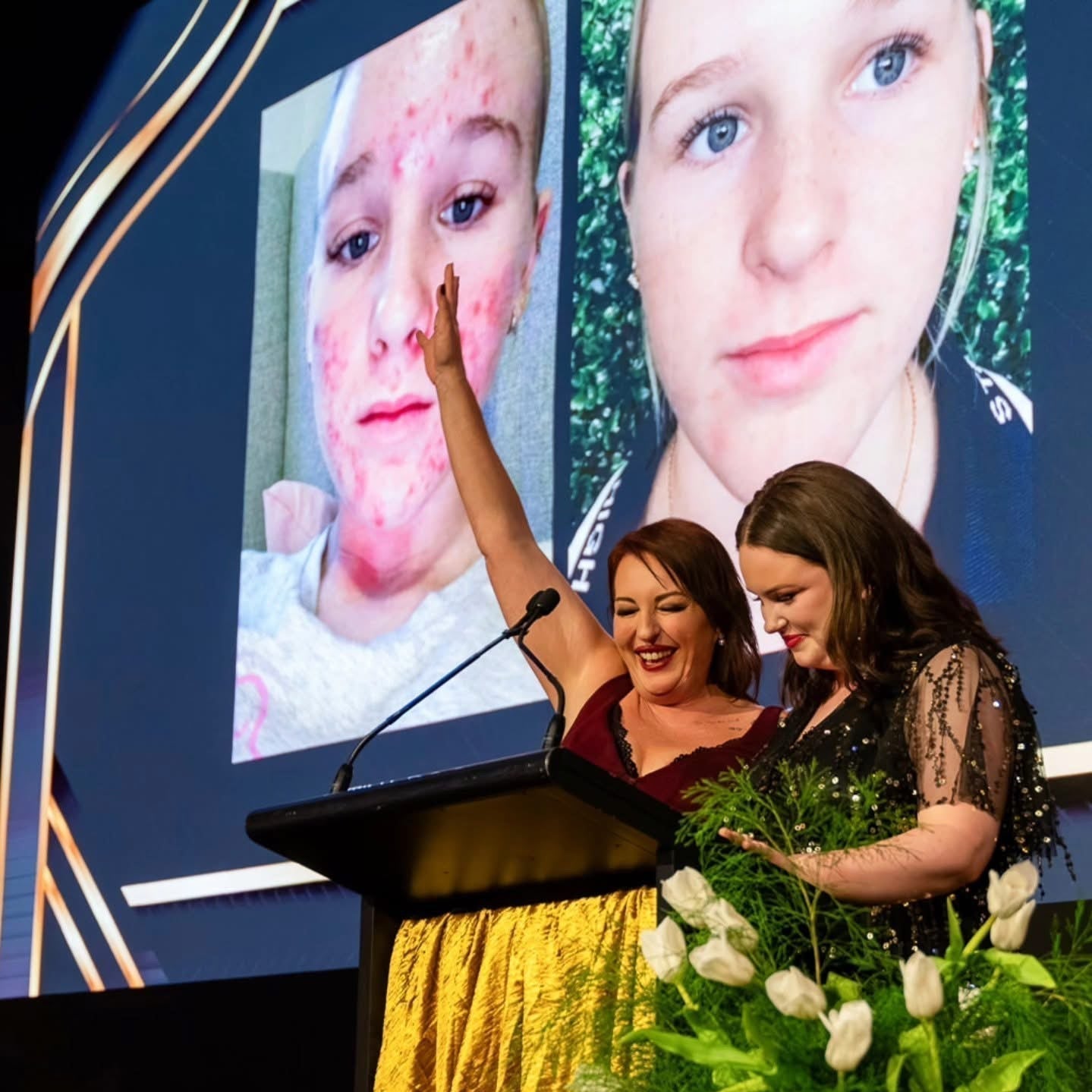
The Best Client Transformation 2026 award went to Claire.
Claire came to me with cystic acne that had been treated, retreated, and treated again. Products. Facials. Topical prescriptions. Her skin was not improving. In some ways, it was getting worse.
When I assessed Claire, the first thing I did was not recommend a product.
I looked at what was actually happening.
Chronic inflammation. A compromised barrier. A routine that was actively working against her skin's ability to heal — because nobody had ever mapped it properly.
We stopped almost everything. We stabilised. We rebuilt — methodically, in the right sequence, with the right mechanisms in the right order.
Twelve months later, her skin was clear. Without prescription medication. Without aggressive intervention.
That transformation didn't happen because of a product. It happened because of a different way of thinking about what her skin actually needed.
Claire is not unusual. In my experience, most people whose skincare isn't working are in exactly her position — not lacking the right product, but lacking a strategy built around what their skin is actually doing.
What HydroPeptide Stockist of the Year Actually Means
HydroPeptide Stockist of the Year is not a sales award. It is not awarded for moving the most units.
It is awarded based on clinical outcomes, client education, and how a stockist integrates the brand into genuine skin strategy.
I do not stock everything. I stock what I can stand behind clinically.
Every product in my clinic is there because I understand the mechanism. I know why it works. I know who it works for. I know — critically — when not to use it.
That is a fundamentally different relationship with product than most clinics have. And it is precisely why skincare works for my clients when it hasn't worked anywhere else.
If you've been buying products without this kind of thinking behind the recommendation, you're not failing at skincare. You've just never had the right starting point. Explore the TRSA shop to see what a clinically curated range actually looks like — and why each product is there.
What Best Owner/Operator 2026 Confirmed
This is the one I've sat with longest.
Because what it really recognises is the integration of clinical thinking into every layer of a business. The same standards I held in a resus bay, I hold in a treatment room, in a product recommendation, and in every piece of content I create.
Evidence over hype. Systems over symptoms. Diagnosis before prescription.
These are not marketing phrases. They are the actual operating principles I have worked from for three decades.
The award confirmed that this approach is not just clinically sound. It is commercially recognised at a national level.
And if the industry's best clinical educators can see it, you can trust that it's real.
Why Your Skincare Isn't Working — And What to Do About It
If you have read this far, I suspect you are tired.
Tired of spending money and not seeing results.
Tired of being told to try one more thing.
Tired of conflicting advice from people who have never actually assessed your skin.
You've probably tried the serums. The facials. The routines built from Instagram and TikTok and the woman at the counter who seemed confident. And you're still here, which tells me the results haven't matched the investment.
Here's what I want you to understand: that is not a you problem.
Your skin is not broken. Your skin is not difficult. Your skin has simply never been given a strategy built around what it is actually doing — rather than what someone hoped it would respond to.
The framework is not complicated. It follows three stages every time:
Stage 1 — Calm and Stabilise. Before any correction can happen, inflammation has to come down and the barrier has to be intact. Skip this and everything after it is wasted.
Stage 2 — Correct at the Source. Targeted actives that address the actual pathway — melanin production, collagen loss, congestion — not just the surface symptom.
Stage 3 — Protect and Maintain. SPF is not optional. It is not a finishing step. It is the reason your results last, or don't.
This is the approach that won three awards. And it is available to you — not just in clinic, but through the products I have curated specifically to support each of these stages. Browse the TRSA collection to find where your skin is in this process, and what it actually needs next.
Ready to Stop Guessing?
If your skincare isn't working, the answer isn't another product.
It's a different starting point.
Book a skin consult with Tina — a clinical assessment that maps what your skin is actually doing, and builds a strategy around that. Not a product push. A plan.
Shop the TRSA clinical range — every product selected for a specific mechanism, a specific stage, and a specific outcome. Nothing on these shelves is there by accident.
Tina Roche is a Nurse Practitioner (MNSc, PhD) with 30 years of clinical experience across emergency medicine and aesthetics. She is the founder of Tina Roche Skin & Aesthetics, Stanthorpe QLD, and the 2026 recipient of HydroPeptide Stockist of the Year, Best Client Transformation, and Best Owner/Operator.