
Skip to content
30-Day Return Policy
Free Shipping Over $150 | Flat Rate $10
PayPal Afterpay

Cart

Your cart is empty

Beauty Oil

Cold-Pressed Organic Flaxseed (61%) + Safflower Oil | Primary EFAs | Daily Skin Food | 500ml

EMPTY DOM REMOVE PROTECTOR
Sale price$69.95
Size:
EMPTY DOM REMOVE PROTECTOR

Complete your routine

EMPTY DOM REMOVE PROTECTOR
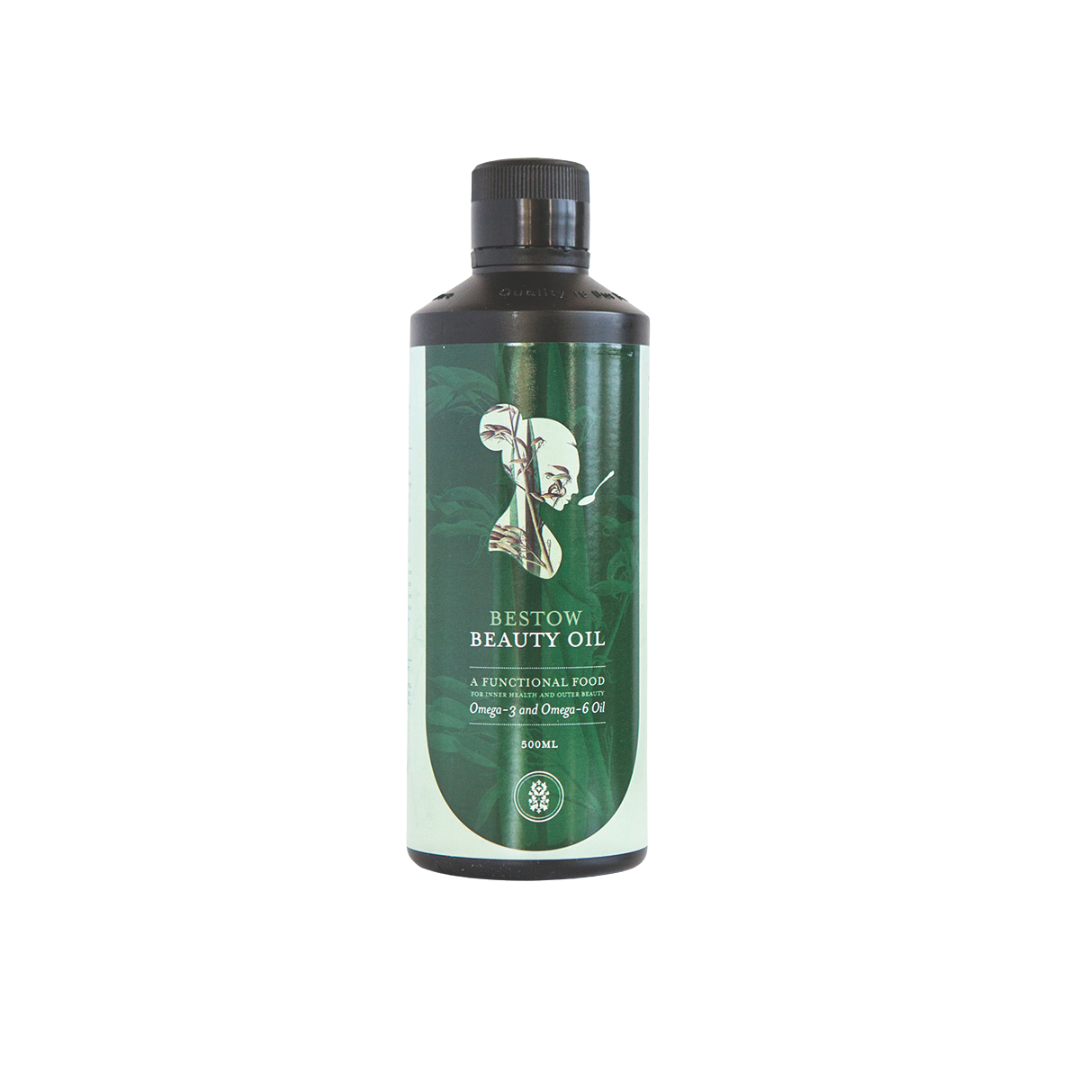
Bottle of Bestow Beauty Oil on a white background
Beauty Oil Sale price$69.95

Targets / Benefits

β€’ Essential fatty acid deficiency affecting skin condition

β€’ Oily, congested or breakout-prone skin

β€’ Dry, dull or prematurely ageing skin

β€’ Daily skin nourishment from within

β€’ Long-term skin health maintenance

Why You'll Love It

EFA deficiency is one of the most common β€” and most overlooked β€” causes of skin problems. Because essential fatty acids are responsible for regulating the skin's oil production, a deficiency can present as either oily or dry skin, and will consistently contribute to congestion, breakouts, sensitivity, and premature ageing regardless of how much topical skincare is applied on top. Bestow Beauty Oil addresses this at the source. Certified organic cold-pressed flaxseed oil (61%) is the richest plant-based source of alpha-linolenic acid (ALA) β€” the primary Omega 3 β€” delivering the essential fatty acid that the skin cannot manufacture on its own but needs to function optimally. Safflower oil provides linoleic acid (LA) β€” the primary Omega 6 β€” in a ratio carefully calibrated with the flaxseed to deliver the best Omega 3:6 balance for skin health. Together, these two cold-pressed oils feed the skin cell at the deepest layer of the epidermis. As that cell progresses upward through the skin layers, it releases its oils β€” creating plump, supple, smooth, glowing skin from the inside out. For oily and congested skin: the improved sebum quality that results from regular EFA intake creates a healing, anti-inflammatory, non-sticky outer layer rather than the thick, congesting sebum associated with EFA deficiency. For dry and ageing skin: the cellular hydration effect creates visible plumpness, suppleness, and radiance that no topical moisturiser can replicate. Take one tablespoon daily mixed into food β€” not heated. Recommended as a maintenance product after completing one to two bottles of Bestow Beauty Plus Oil.

How To Use

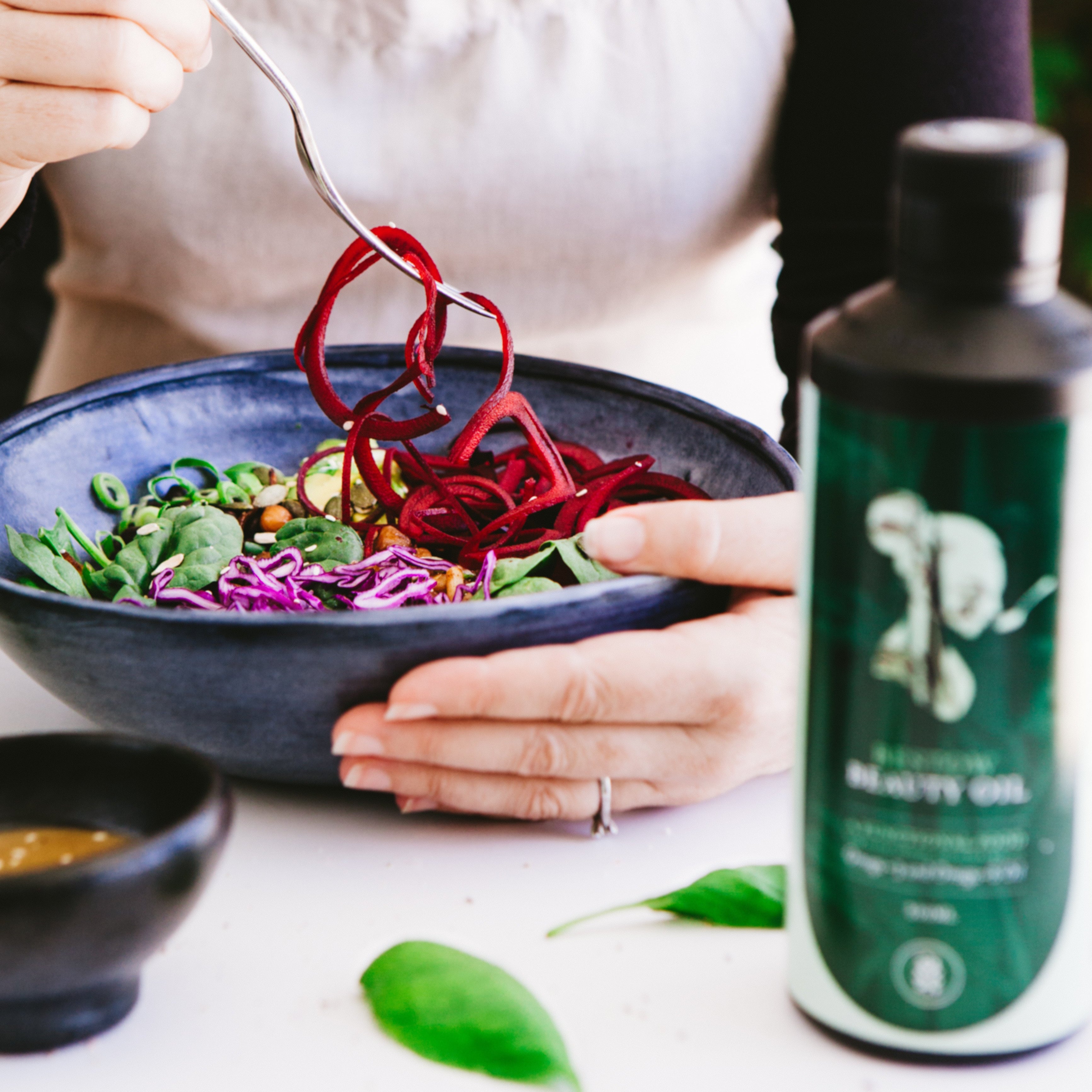
Take one tablespoon (15ml) every day mixed into food. Do not heat. Mix into smoothies, cooled porridge or muesli, natural yoghurt, salad dressing, or any room-temperature food. Store in the refrigerator once opened. Use consistently β€” benefits build over weeks of daily use.

Suggested daily rituals:

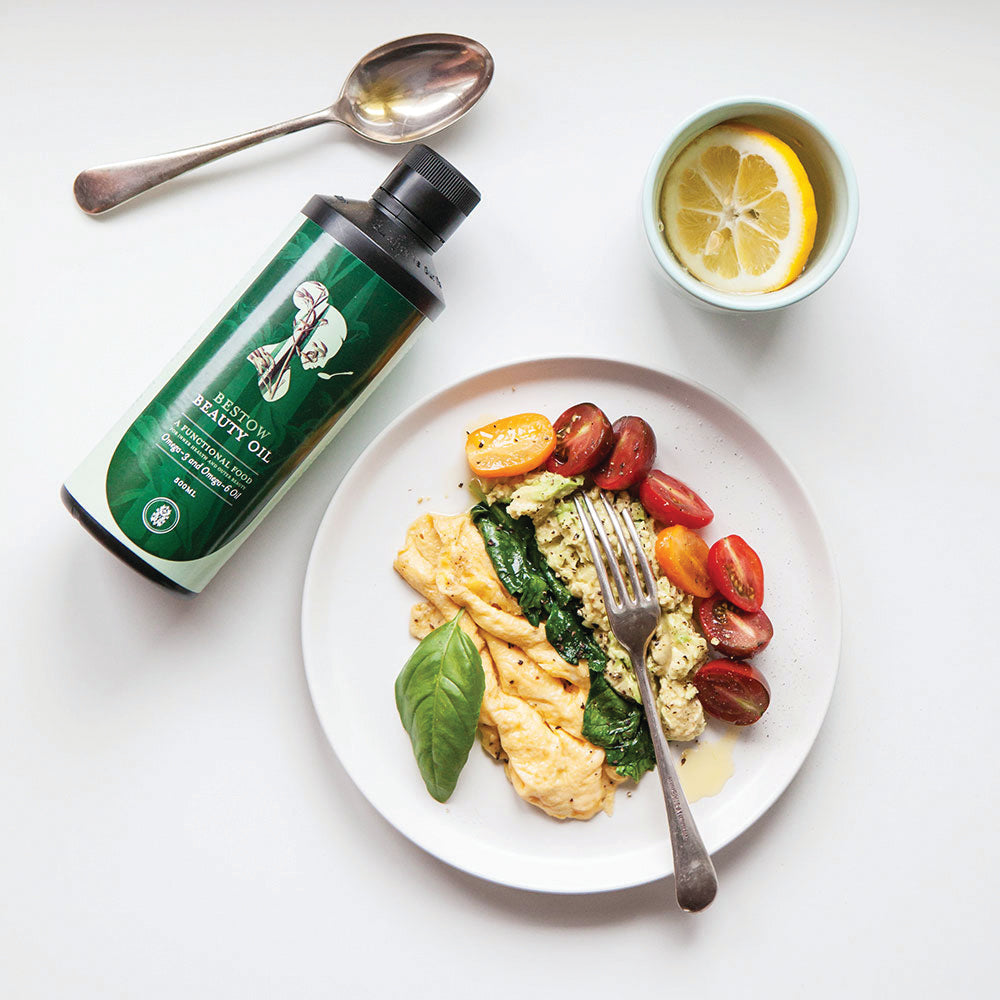
  • Morning smoothie with banana, almond milk, and berries
  • Drizzled over cooled porridge with honey
  • Mixed into natural yoghurt with blueberries
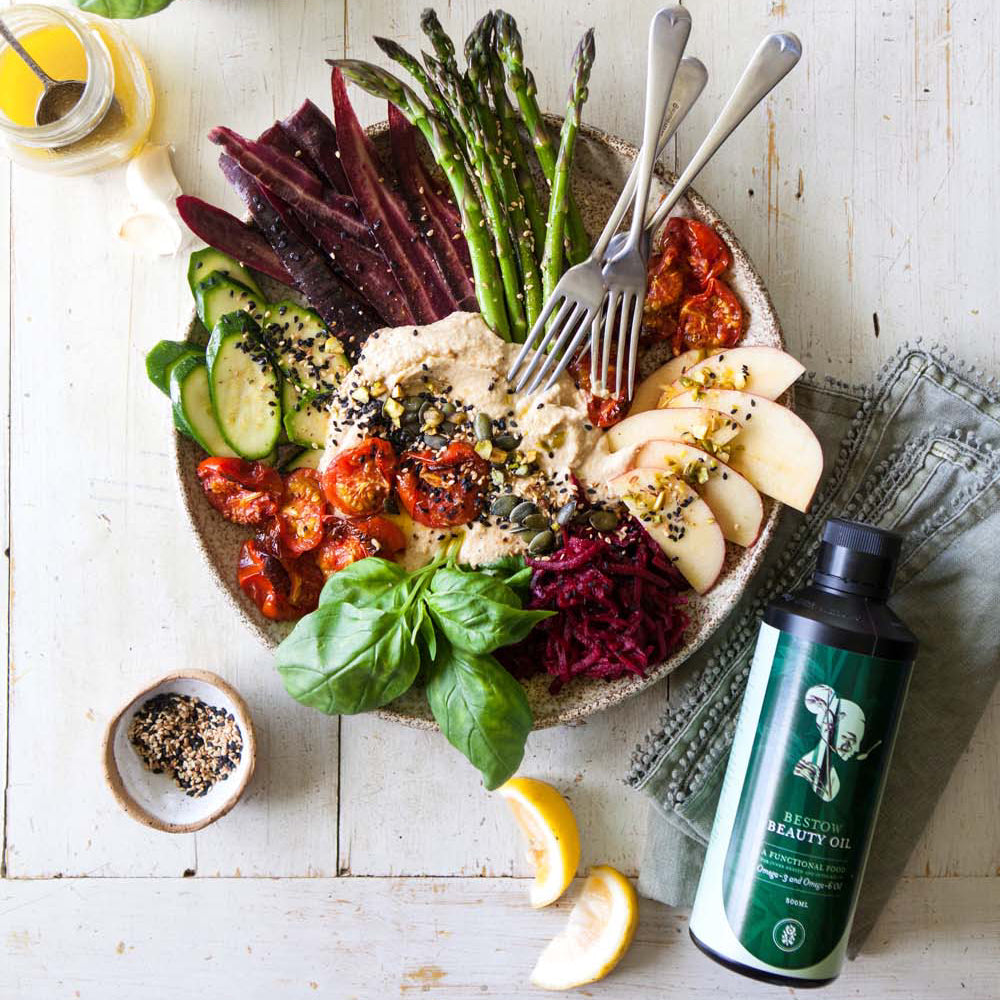
  • Bestow Lemony Vinaigrette salad dressing

Pathway: Start with Bestow Beauty Plus Oil for one to two bottles to clear conversion blockages, then transition to Bestow Beauty Oil for ongoing daily maintenance.

Full Ingredient List

Cold-pressed, unrefined, extra virgin, certified organic flaxseed (linseed) oil (61%), safflower oil.

All reasonable efforts have been made to ensure that ingredient listing, product images and other information for products displayed on this website are up to date, accurate and complete. However, we still recommend that you please check the ingredient listings on a product packaging before use.

Skin Types

All Skin Types | Daily Maintenance

Oily / Congested / Acne-Prone

Dry / Dehydrated / Prematurely Ageing

Key Ingredients

Certified Organic Cold-Pressed Flaxseed (Linseed) Oil β€” 61%

The richest plant source of alpha-linolenic acid (ALA) β€” the primary Omega 3 essential fatty acid β€” at a clinically meaningful 61% concentration. ALA feeds the skin cell at the deepest layer of the epidermis, creating visible plumpness, suppleness, and radiance as cells progress upward through the skin layers.

Safflower Oil

Rich in linoleic acid (LA) β€” the primary Omega 6 EFA β€” carefully balanced with the flaxseed oil to deliver the optimal Omega 3:6 ratio for skin health. Safflower's high linoleic acid content supports the production of healthy, non-congesting sebum that protects rather than blocks the skin.

Your questions, answered by your NP

Beauty Oil - everything you need to know before you buy.

What are essential fatty acids β€” and why does EFA deficiency show on the skin?

Essential fatty acids are dietary fats that the human body cannot manufacture β€” they must come from food. There are two primary EFAs: alpha-linolenic acid (ALA), the Omega 3, and linoleic acid (LA), the Omega 6. Both are required for normal skin function at the cellular level, and both are obtained almost entirely through diet. When EFA intake is inadequate β€” which is common in modern diets that are low in cold-pressed oils and high in processed fats β€” the skin is the first organ to show the deficit visibly and reliably. The reason is mechanical: EFAs are incorporated into the phospholipid bilayer of every skin cell membrane. They determine membrane fluidity, cell-to-cell signalling efficiency, and the quality of the oils the sebaceous glands produce. EFA-deficient cell membranes are stiff and poorly permeable β€” water escapes through them rather than being retained, creating the dry, tight, dull skin quality associated with dehydration that topical moisturisers temporarily address but can't resolve. EFA-deficient sebaceous glands produce thick, congesting, sticky sebum rather than the thin, fluid, protective oil that healthy skin requires β€” creating the comedone-forming, pore-blocking, breakout-driving sebum quality that most clients with oily and acne-prone skin are familiar with. The paradox of EFA deficiency is that it produces both excessively oily and excessively dry skin, depending on the individual β€” and treating either with topical products alone, without addressing the dietary EFA deficit, produces temporary results at best. Bestow Beauty Oil addresses the root cause with two ingredients: certified organic cold-pressed flaxseed oil (61% ALA β€” the richest plant-based Omega 3 source available) and safflower oil (high linoleic acid β€” Omega 6), calibrated to deliver the optimal Omega 3:6 ratio specifically for skin health.

Is Beauty Oil suitable for sensitive skin?

Yes β€” and sensitive skin is one of the conditions that benefits most directly from addressing EFA deficiency from within. The Beauty Oil is a food product, not a topical, so there is no direct contact with reactive skin and no sensitisation risk from application. The two ingredients β€” certified organic cold-pressed flaxseed oil and safflower oil β€” are dietary fats with no documented food allergy concern for the vast majority of people. The clinical relevance for sensitive skin is at the cellular level: EFA deficiency weakens the skin cell membrane and reduces its ability to retain water and resist environmental irritants, which is one of the primary drivers of skin reactivity. Supplementing with the Omega 3 (ALA from flaxseed) and the Omega 6 (linoleic acid from safflower) restores membrane integrity over weeks of consistent daily use, producing a skin that is genuinely less reactive from within rather than simply managed with calming topicals on the outside. For clients with eczema, rosacea, or persistently reactive skin who also show signs of conversion enzyme blockage β€” unresponsive skin, stress-related flaring, post-illness deterioration β€” the Bestow Beauty Plus Oil is the more targeted starting point, as the directly-delivered GLA from evening primrose and blackcurrant seed is specifically relevant to inflammatory skin conditions. One tablespoon daily in food β€” not heated. Consistent daily use for a minimum of eight to twelve weeks is required before assessing results.

Is it suitable for oily and acne-prone skin β€” or only for dry skin?

Both β€” and the EFA paradox makes oily and acne-prone skin potentially the most clinically important indication for this product. The misconception is that oily skin is caused by too much fat and therefore dietary fat should be reduced. The opposite is true for EFA-specifically. The sebaceous gland produces sebum continuously regardless of dietary fat intake, but the quality of that sebum β€” its viscosity, its pore-blocking tendency, its inflammatory potential β€” is directly determined by the EFA availability in the diet. EFA-deficient sebum is thick, sticky, and highly comedogenic β€” it oxidises quickly in the pore, triggers inflammation, and forms the foundation of the congestion-to-breakout cycle. EFA-sufficient sebum is thin, fluid, and anti-inflammatory β€” it flows freely out of the pore rather than blocking it, and its linoleic acid content actively inhibits the conversion of sebum into the inflammatory compounds that trigger acne. A 1994 study demonstrated that the surface sebum of clients with acne is specifically deficient in linoleic acid compared to clear-skinned controls β€” and that the skin surface becomes more resistant to comedone formation as linoleic acid intake increases. This is the mechanism behind Bestow Beauty Oil's clinical relevance for oily and acne-prone skin: it doesn't reduce sebum volume, but it transforms sebum quality from a congestion-driver into a protective skin barrier component. For dry and dehydrated skin: the ALA from flaxseed incorporates into cell membranes and restores their water-retaining capacity, creating cellular hydration that no topical can replicate because it operates at a structural level rather than a surface level.

How do I use it β€” and does it matter what I mix it with?

One tablespoon (15ml) daily, mixed into room-temperature food β€” not heated. The heat instruction is the most important constraint: flaxseed oil is particularly rich in polyunsaturated fatty acids, which oxidise rapidly when heated, converting the beneficial ALA into harmful oxidised lipids. Adding Bestow Beauty Oil to a hot dish immediately before eating, or mixing it into cooled porridge, is appropriate; cooking with it, adding it to a hot pan, or blending it into a hot smoothie is not. The food mixing requirement is not for palatability β€” the oil mixes easily and has a mild, light flavour β€” but to ensure the EFAs are taken with a meal that includes protein and other fats, which improves absorption and integration at the cell membrane level. The page suggestions are all appropriate: a morning smoothie with banana, almond milk, and berries; drizzled over cooled porridge; mixed into natural yoghurt; or as the Bestow Lemony Vinaigrette salad dressing. If you forget to take it with breakfast, the tablespoon mixed into salad dressing at lunch or drizzled over dinner vegetables at room temperature is equally effective β€” the timing of the daily tablespoon matters less than the consistency of taking it every day. Store in the refrigerator once opened and use within the date on the bottle β€” oxidised flaxseed oil has a rancid smell and should not be consumed.

When will I see results?

The timeline is honest and worth setting clearly: this is not a product that produces results in days. The mechanism operates at the cell level β€” the basal cells of the epidermis (the deepest skin layer) must first incorporate the EFAs into their membranes, then those cells must progress upward through the skin's cell turnover cycle to the surface, where their improved structure and oil quality becomes visible. The full cell turnover cycle takes approximately 28 days in younger skin and up to 60 days in mature skin. Most clients who are consistently deficient in EFAs notice the earliest changes β€” improved skin texture, less dryness or less congestion β€” around four to six weeks of daily consistent use. Visible improvements in skin tone, radiance, and breakout frequency typically become clear at eight to twelve weeks. For the most significant change in oily and acne-prone skin (improved sebum quality and reduced congestion), the timeline is often ten to sixteen weeks because the sebaceous gland's sebum composition takes longer to shift than the surface cell membrane quality. The pathway protocol on this page is clinically important: starting with Bestow Beauty Plus Oil (which contains additional GLA from evening primrose and borage to bypass a common conversion enzyme blockage) for one to two bottles before transitioning to Beauty Oil typically accelerates these timelines because the Plus Oil addresses a bottleneck that delays EFA benefit in a significant proportion of clients.

Can I take it during pregnancy or breastfeeding?

This is a consumed supplement, so the pregnancy guidance is more nuanced than for topical products β€” and more important to get right. Cold-pressed organic flaxseed oil is a plant-based Omega 3 source (ALA) and safflower oil is a plant-based Omega 6 source (linoleic acid). Both are dietary fats found naturally in whole foods. One tablespoon daily of this oil blend is within the range of dietary fat intake from food sources that is consistent with a normal diet during pregnancy. However, there are two specific considerations worth raising. First, high-dose flaxseed oil supplementation during pregnancy: ALA from flaxseed can convert (partially and inefficiently) to DHA and EPA, the marine Omega 3s important for foetal brain and eye development. At one tablespoon daily, the Beauty Oil provides dietary-range ALA rather than therapeutic supplementation β€” this is appropriate as a dietary complement but is not a substitute for a marine-sourced Omega 3 supplement if your obstetrician has recommended one. Second, flaxseed contains lignans with mild phytoestrogenic properties: at food quantities, these are not documented to cause harm during pregnancy, but high-dose flaxseed supplementation is generally approached cautiously in the first trimester as a precautionary measure. My recommendation: one tablespoon daily of Bestow Beauty Oil is a reasonable dietary-range flaxseed intake during pregnancy and breastfeeding, but discuss with your obstetrician before beginning or continuing it, particularly in the first trimester. During breastfeeding, ALA from flaxseed is considered safe and may support milk EFA composition.

What is the pathway β€” do I need to start with Bestow Beauty Plus Oil first?

The pathway is genuinely important and the explanation on the page deserves expanding. The conversion of dietary ALA (Omega 3 from flaxseed) and LA (Omega 6 from safflower) into the longer-chain EFAs that cell membranes actually use β€” GLA (gamma-linolenic acid) from LA, and EPA from ALA β€” depends on an enzyme called delta-6-desaturase. In a significant proportion of the population, this enzyme is inefficient or partially blocked due to factors including nutrient deficiencies, high sugar and alcohol intake, stress, smoking, and genetic variation. When delta-6-desaturase is blocked, the dietary ALA and LA don't convert efficiently, and EFA supplementation produces limited or delayed results regardless of the oil quality. Bestow Beauty Plus Oil bypasses this conversion step by providing GLA directly β€” from borage and evening primrose oils β€” in addition to ALA and LA. The GLA enters the EFA pathway downstream of the blocked enzyme and begins producing results immediately rather than waiting for the conversion step. After one to two bottles of Beauty Plus Oil, the conversion blockage is typically resolved and the system can process ALA from the Beauty Oil efficiently on its own. The recommended pathway: one to two bottles of Beauty Plus Oil first (approximately one to two months at one tablespoon daily), then transition to Beauty Oil for ongoing maintenance. Clients who have recently completed a course of Beauty Plus Oil can start directly with Beauty Oil. Clients who are new to EFA supplementation and have visible skin concerns should begin with Beauty Plus Oil to ensure the fastest possible result.

EMPTY DOM REMOVE PROTECTOR