
Skip to content
30-Day Return Policy
Free Shipping Over $150 | Flat Rate $10
PayPal Afterpay

Cart

Your cart is empty

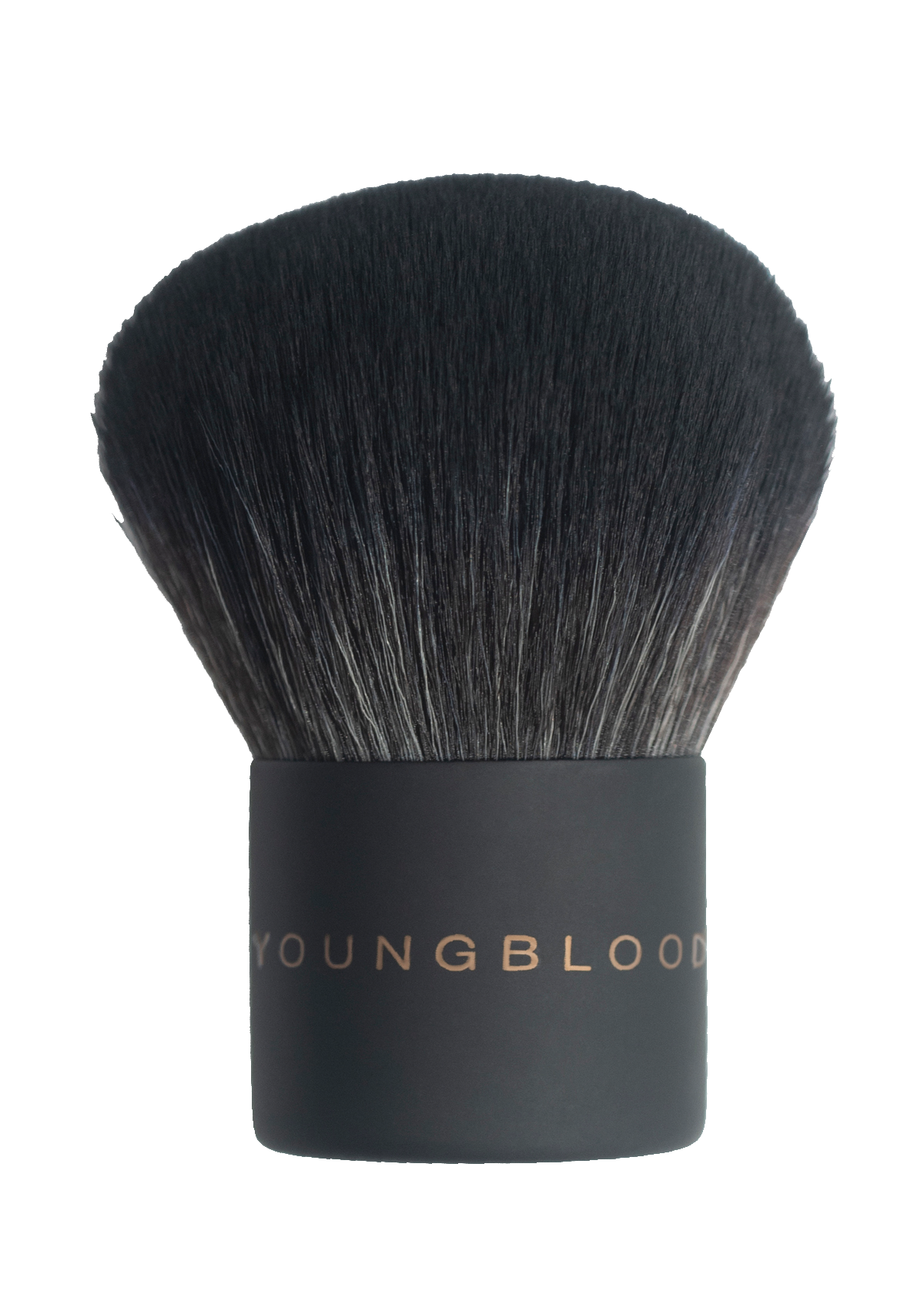
YB1 Kabuki Brush

Artist-Quality Taklon Synthetic Fibres | Hand-Made Kabuki | Loose + Pressed Powder

EMPTY DOM REMOVE PROTECTOR
Sale price$55.50
EMPTY DOM REMOVE PROTECTOR
YB1 Kabuki Brush
YB1 Kabuki Brush Sale price$55.50

Benefits

• Seamless, airbrushed mineral foundation finish

• Buildable coverage without patchiness or streaking

• All-over face application for foundation, bronzer, and setting powder

• Vegan, cruelty-free brush construction

•Long-lasting brush that washes and holds its shape

Why You'll Love It

The kabuki shape is the most effective brush for loose and pressed mineral powder application — and the YB1 is one of the best examples of the format available. Hand-made from Youngblood's artist-quality Taklon synthetic fibres, the brush head is unusually soft and dense, with a close-packed dome shape that picks up the ideal amount of loose or pressed powder product without overloading or causing fallout. The short handle provides exceptional control during application — particularly for the circular buffing motion that blends mineral foundation seamlessly into the skin. Apply in small circular motions to build coverage evenly, or use a light sweeping motion for an all-over dusting of bronzer or setting powder. The synthetic Taklon fibres are soft, non-abrasive, and gentle on all skin types including sensitive and rosacea-prone skin. They're also exceptionally easy to clean — the fibres release product quickly with a mild brush cleanser and the brush holds its dome shape wash after wash. Compatible with all Youngblood loose powder formulas: Loose Natural Mineral Foundation, New Loose Mineral Rice Setting Powder, Mineral Radiance, and Defining Bronzer.

How To Use

Tap the brush into the loose mineral foundation jar and tap off excess on the lid. Apply to the face in small circular buffing motions, starting at the centre and working outward. Build coverage in layers — two light applications give better coverage than one heavy one. For all-over setting, sweep lightly across the face after liquid foundation. For bronzer, focus on the areas where the sun would naturally touch: temples, bridge of the nose, cheekbones. Clean regularly with a mild brush cleanser or gentle shampoo; reshape and allow to dry bristle-end down or flat.

Skin Types

All Skin Types

Loose Mineral Foundation Users

Pressed Powder + Setting Powder Users

EMPTY DOM REMOVE PROTECTOR
Tina Roche skincare results guarantee

YOUR RESULTS ARE GUARANTEED

If you're not seeing visible results within 30 days, contact us. We'll make it right - no hassle, no fine print.

Your questions, answered by your NP

YB1 Kabuki Brush- everything you need to know before you buy.

What is a kabuki brush — and why is the dome shape specifically suited to mineral foundation?

A kabuki brush is defined by two things: a short handle and a densely packed, domed head. Both features serve a specific function in mineral powder application. The short handle positions your hand close to the face, which gives you the control and feedback needed for the circular buffing motion that is the key technique for mineral foundation — you can feel the product depositing and building in a way that a long-handled brush at arm's length doesn't allow. The domed head shape is the critical distinction from a flat-topped powder brush: the dome contacts the skin across the full curved surface of the cheek, nose, and forehead simultaneously and follows the face's contours without lifting at the edges. This is what produces the even, patchiness-free coverage that mineral foundation is capable of when applied correctly. A flat-topped brush applied with circular motions creates uneven pressure — more at the centre of the stroke, less at the edges — which is the most common cause of streaking in mineral foundation application. The YB1's dome distributes the circular buffing motion evenly across the entire bristle face, which is why the application result is described as airbrush-like: seamless, uniform, buildable. The bristle density is the other factor. A sparse brush picks up too much product, deposits unevenly, and causes fallout. The YB1's close-packed Taklon fibres pick up a controlled, consistent amount of powder — enough to build coverage without overloading.

How is it different from the YB2 Powder Brush — and do I need both?

The clearest way to frame the distinction: the YB1 buffs, the YB2 sweeps. Buffing — the YB1's technique — means firm, small circular motions that work product into the skin surface. This is what builds coverage in the Loose Mineral Foundation, creates the seamless base the product is designed to deliver, and deposits powder at the level where it grips the skin rather than sitting on top of it. Sweeping — the YB2's technique — means broad, outward-flowing strokes that deposit a light, diffused veil of product across the full face in a single motion. This is what gives bronzer and setting powder their natural, diffused appearance. The two brushes serve different steps in a mineral makeup routine rather than the same step at different intensities. The recommended workflow for the full Youngblood powder routine: YB1 first with the Loose Mineral Foundation for coverage, then YB2 with bronzer or setting powder for a finishing sweep. If you can only start with one: the YB1 for anyone whose primary product is the Loose Mineral Foundation; the YB2 first if your primary use is bronzer and setting powder over liquid or cream foundation. For the Beauty Edit Kit (which includes the Loose Mineral Foundation): the YB1 is the brush the kit is missing and the most important companion purchase alongside it.

How do I apply the Loose Mineral Foundation with the YB1 for the best coverage result?

Technique is the single biggest determinant of mineral foundation results — the same product applied correctly versus incorrectly looks like two different products. The correct sequence: remove the sifter from the jar if present. Tap the YB1 brush head directly into the jar — don't swirl, tap. Tapping picks up a controlled amount of product; swirling overloads the brush and causes fallout. Tap off the excess on the inside of the jar lid or on the back of the hand until you can see that the bristles aren't heavily loaded. Apply to the face in small, firm circular motions starting at the outer perimeter — the hairline, jaw, and temples — not the centre. Working from the perimeter inward ensures the heaviest product deposit is at the edges where coverage is most needed, and the lighter residue on the brush covers the centre for a seamless blend. Build coverage in layers: two light passes with a lightly loaded brush produces better, more even coverage than one heavy pass with an overloaded brush. This two-pass technique is the difference between a cakey result and an airbrushed one. For post-procedure application: use the same technique with the lightest possible pressure — the circular motion should feel like the brush is barely touching the skin surface on compromised tissue.

Can it be used with pressed powders and liquid foundations — or only loose mineral powder?

Both — though the kabuki shape is most specifically optimised for loose and pressed powder. For pressed powders (Hi-Definition Mineral Perfecting Powder, Pressed Mineral Rice Setting Powder): tap the dome head onto the pressed surface and apply the same circular buffing motion — the YB1 picks up pressed powder more gently than a puff and produces a more seamless result on textured or large-pored skin than the press-and-roll puff technique. For liquid and cream foundation: the YB1 can be used for stippling and buffing a liquid foundation into the skin — dampen the brush slightly first to prevent the formula dragging, apply the foundation to the face in dots, then buff with the circular motion to blend. This is an alternative to the sponge technique that produces more coverage and less product absorption. For setting over liquid foundation: use the YB2 for a lighter sweep, or the YB1 for more controlled, heavier setting in the T-zone or under-eye area. The kabuki shape makes the YB1 less suited to precise placement tasks (eyeshadow, contour, blush definition) — those require the specialist brushes in the Youngblood range.

How do I clean it — and how often?

Ideally after every use for mineral foundation specifically — mineral powder mixed with facial oil and dead skin cells on the bristles transfers back to the face on the next application and can affect both coverage quality and skin clarity over time. Cleaning method: wet the dome under warm running water, holding the brush with the handle up and bristles pointing down so water doesn't saturate the ferrule. Apply a small amount of mild soap, gentle shampoo, or dedicated brush cleanser to the palm, and work the dome in gentle circular motions until the water runs clear. Rinse thoroughly. Squeeze excess water from the bristles gently — press between clean fingers rather than wringing. Reshape the dome and lay flat or dry bristle-end down. Never stand upright to dry — water enters the ferrule, dissolves the adhesive, and causes shedding. Frequency: daily cleaning is ideal but not always practical. A minimum of twice weekly for daily foundation users is the realistic threshold for maintaining both brush performance and skin hygiene. Between full washes, a spray brush cleanser — applied to the bristles and wiped on a clean cloth — extends the time between full washes and removes colour build-up without wetting the ferrule.

How long will it last — and what are the signs it needs replacing?

A well-maintained YB1 Kabuki at this construction quality lasts three to five years with regular cleaning. The hand-made Taklon construction maintains the dome shape reliably across hundreds of wash-and-dry cycles — one of the meaningful advantages of artist-quality construction over machine-produced brushes that lose their shape after a few washes. Signs that replacement is needed: persistent bristle shedding during application that doesn't resolve after washing and reshaping; permanent splaying of the dome shape that doesn't recover even when reshaped wet; or ferrule loosening where the bristle head develops movement relative to the handle. A brush that's shedding onto the skin during mineral foundation application is both a hygiene and coverage concern — shed bristles mix with the powder and create uneven deposits. A splayed brush loses the dome geometry that makes the circular buffing technique work, and coverage becomes uneven as a result.